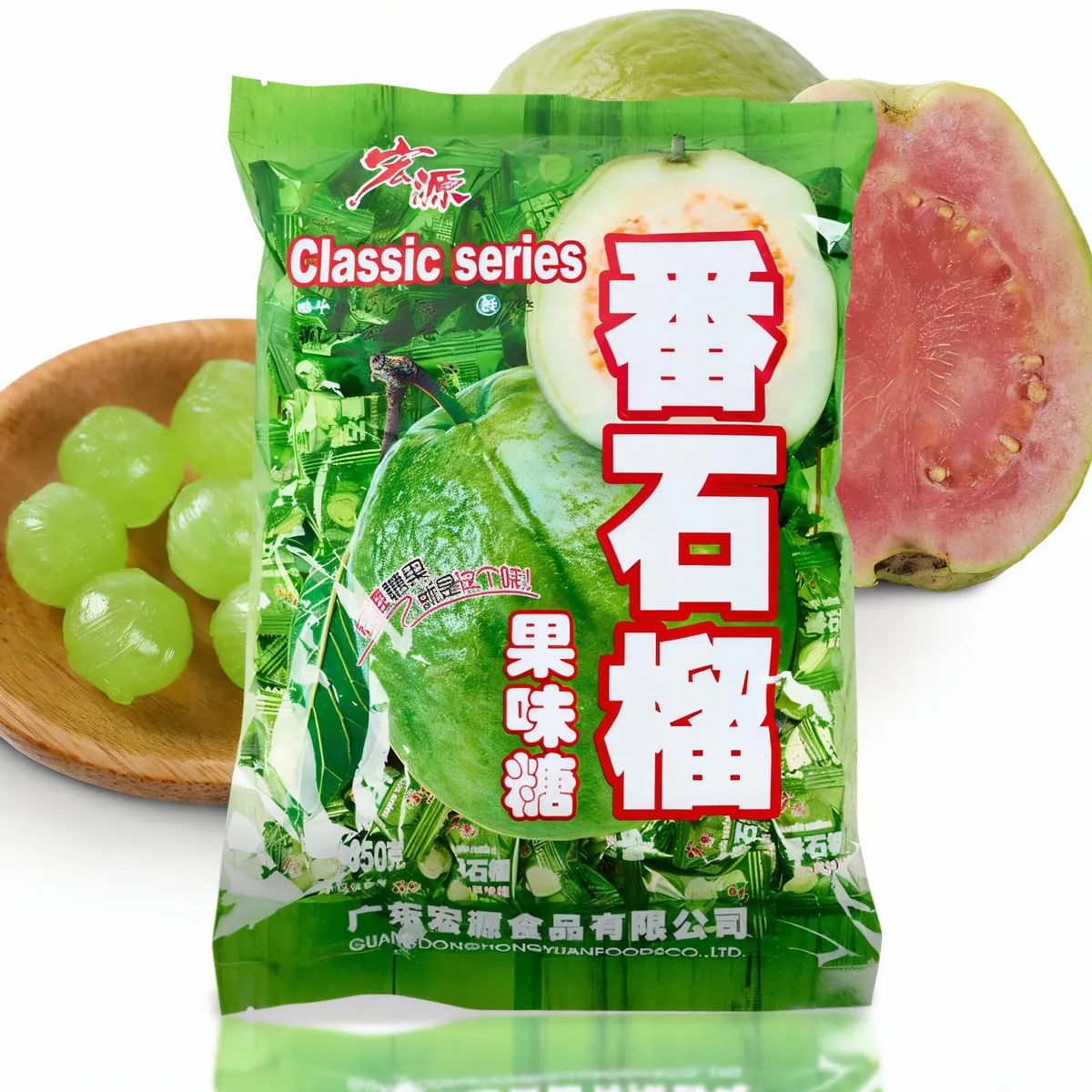
Hongyuan Guava Candy Pack Sizes: What One Bag Costs in Each
The same 350 g bag sells in several packs, and the price of one bag changes with each. The arithmetic, a party planner and storage advice.
Guava made the name, but five more fruits share the shelf. Here is how the Hongyuan flavors differ, in the words of the people who bought them.
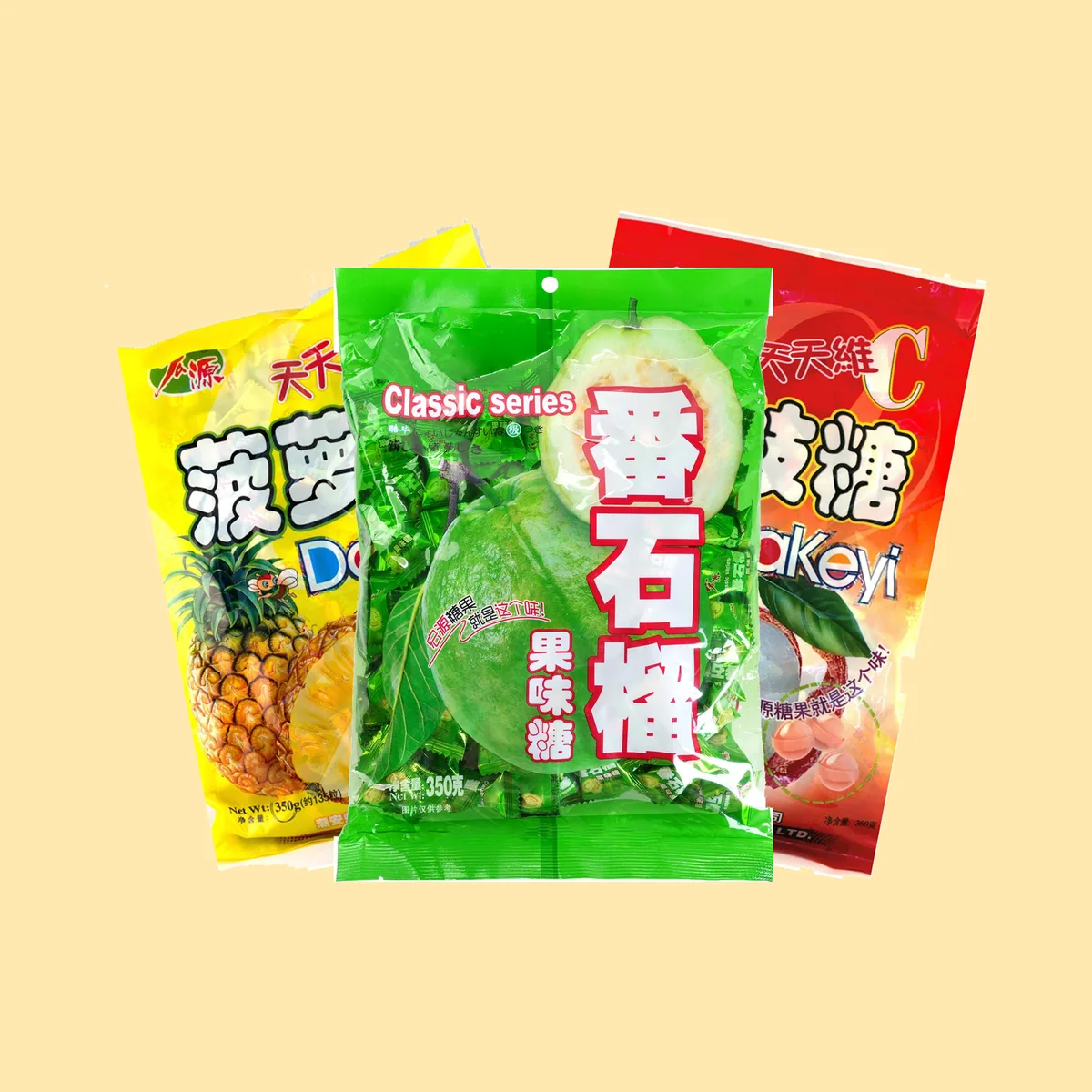
The Hongyuan bags sold in the United States cover six fruits. Guava carries the English line Classic Series. Lychee, peach, pineapple and green apple carry the name Dakeyi. Tangerine peel stands alone under its Chinese name, chenpi. Five of them sell as single-flavor bags today.
Every one is the same kind of sweet: a small hard candy, wrapped piece by piece, in a 350 g bag. The differences are the flavor, the color of the bag and how many packs each one comes in.
| Flavor | Series | Characters on the bag | Bag color | Sold as | From | Lowest price per bag |
|---|---|---|---|---|---|---|
| Guava | Classic Series | 番石榴 | Green | Packs of 1, 2, 3, 4 and 30 bags | $5.99 | $4.59 |
| Lychee | Dakeyi | 荔枝糖 | Red | A single bag | $7.49 | $7.49 |
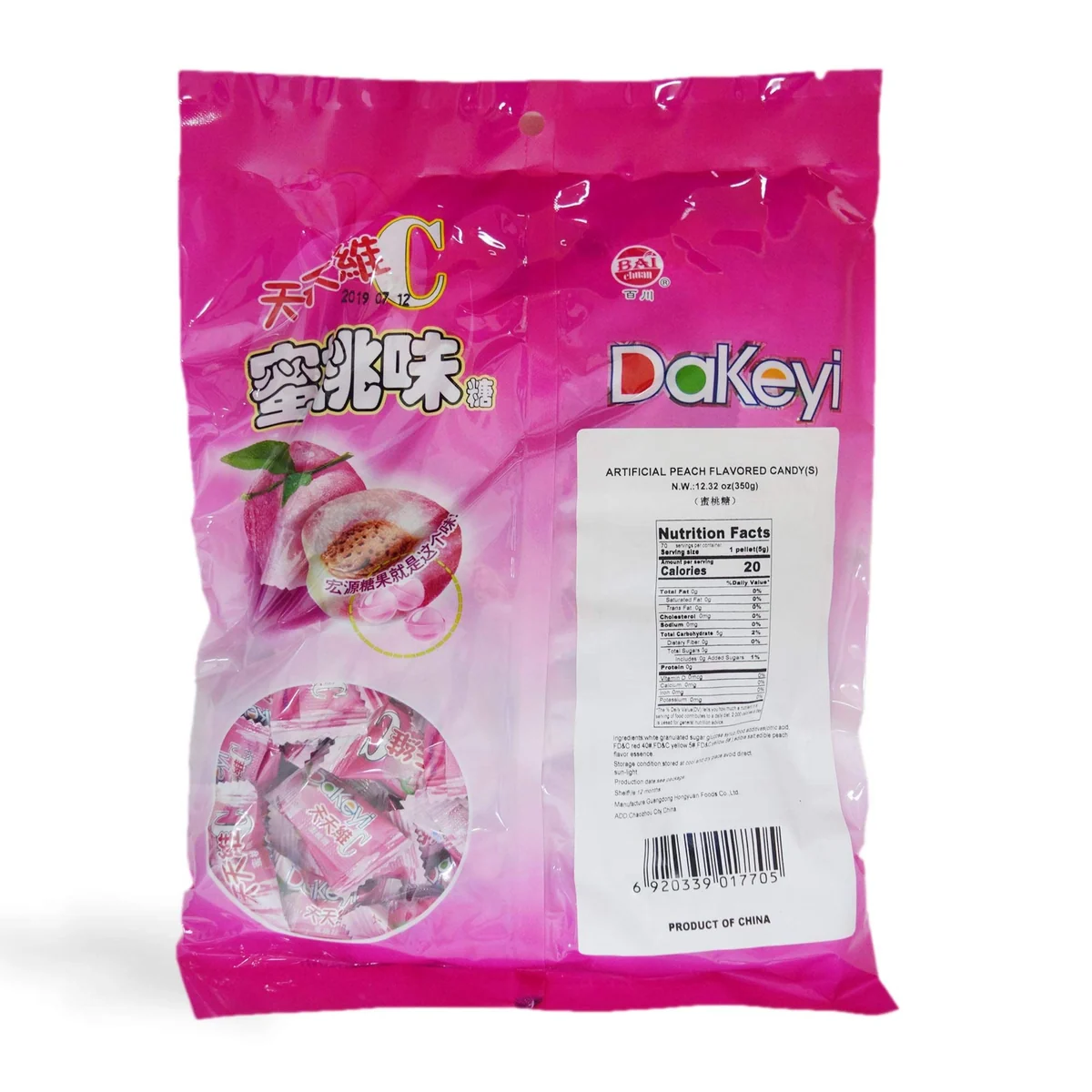
| Peach | Dakeyi | 蜜桃味 | Pink | Packs of 2 and 4 bags | $16.89 | $7.00 |
| Pineapple | Dakeyi | 菠萝糖 | Yellow | A pack of 3 bags | $24.99 | $8.33 |
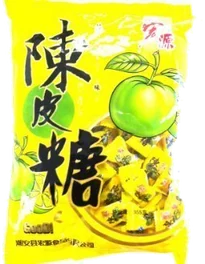
| Tangerine Peel | Chenpi | 陳皮糖 | Yellow, with a green fruit | A pack of 3 bags | $14.95 | $4.98 |
Green apple is missing from that list for a reason. It has no bag of its own on sale, and comes only as one of the three bags in a mixed trio.
Neither name is a second brand. Both are printed beside the same two red characters, 宏源, which read Hongyuan and are the registered mark. Classic Series is the English line on the green guava bag. Dakeyi is the series name on the fruit bags that followed it.
Some product titles put Dakeyi first, as if it were the company. If a bag shows the two characters in the corner, it comes from the same factory whatever the title says. The characters under the name tell you the fruit: 番石榴 is guava, 荔枝 is lychee, 蜜桃 is peach, 菠萝 is pineapple and 陳皮 is tangerine peel.
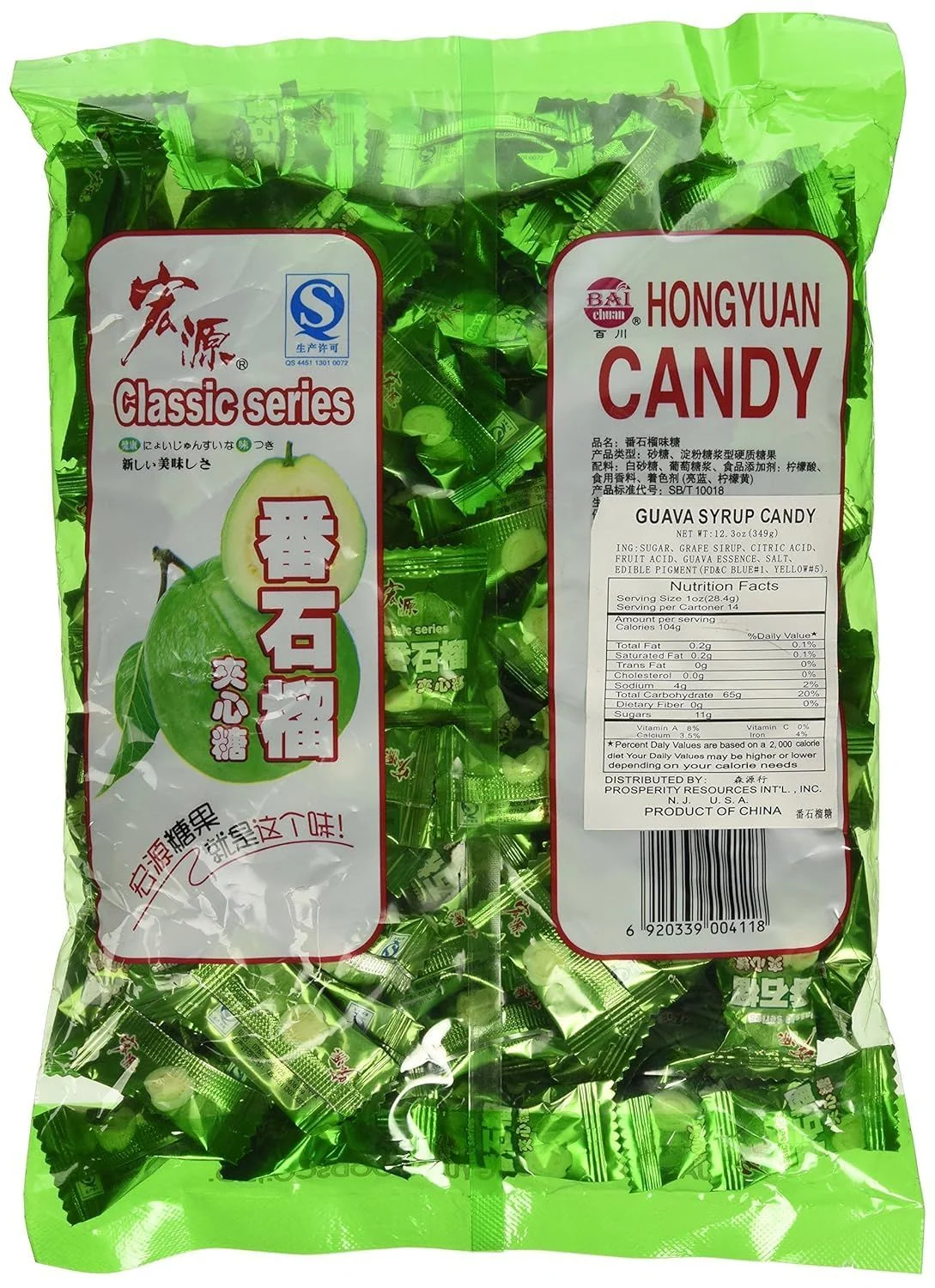
Guava is the flavor that made the brand known in America. Asian restaurants, nail salons and hibachi counters hand it out one piece at a time, and people go looking for the bag afterward. The taste starts sweet and turns tart near the end.
Buyers who know the fruit say the candy is true to it. That is rare praise for a hard candy, where strawberry tends to taste like strawberry candy and not like a strawberry.
The first time I tasted it I was amazed, it tastes exactly like a real guava!
If you have never eaten a guava, the fruit itself is hard to pin down. Growers describe a whole range of flavors and scents under one name.
There is a wide range in flavor and aroma, ranging from sweet to highly acid and strong and penetrating aroma to mild and pleasant.
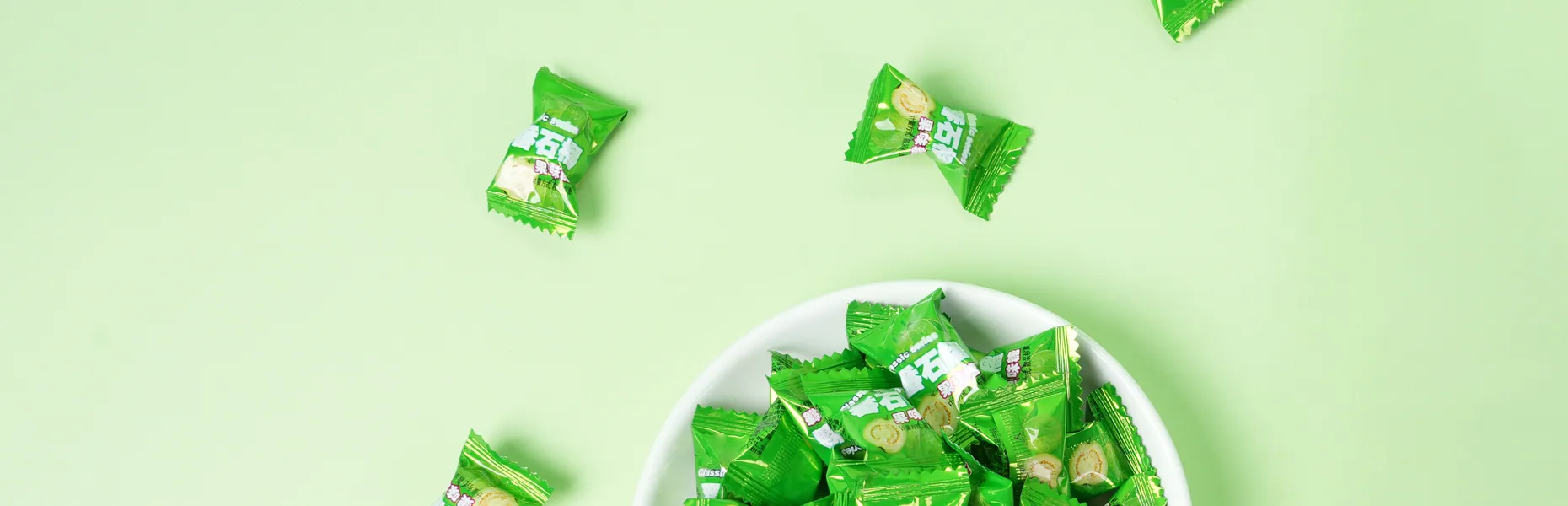
The front of the green bag shows the kind the candy is modeled on: a guava cut open, with pink flesh and a ring of small seeds. The candy takes its color from the skin and its taste from the flesh.
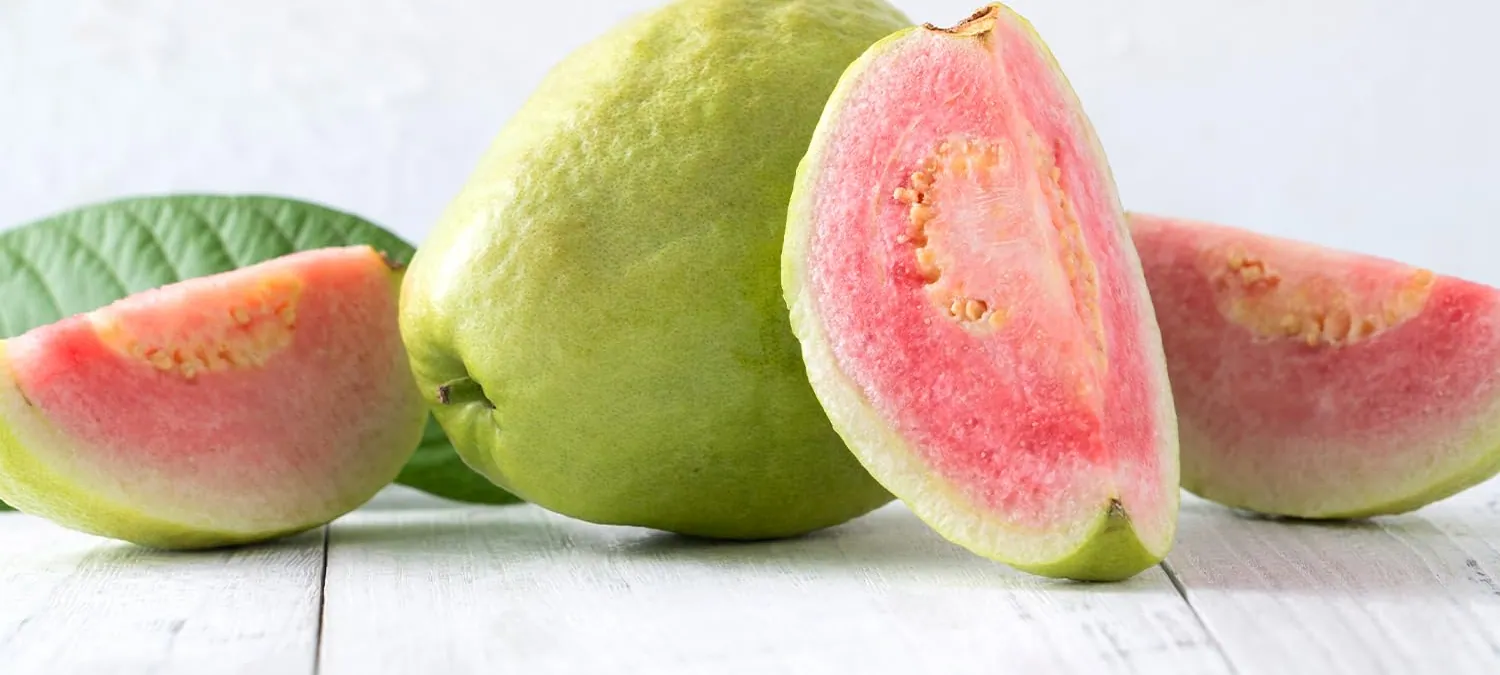
The first thing some people notice about guava candy is the smell. It is strong, sweet and a little animal. That is how ripe guava smells, and a botanist put it in almost the same words decades ago.
The fruit, exuding a strong, sweet, musky odor when ripe, may be round, ovoid, or pear-shaped
Hongyuan kept that note in the candy. Most buyers treat it as proof the flavor is real. A few find it too much, and they say so in their reviews with some humor.
4/5 because your breath is going to smell and your mouths gonna taste, *interesting*.
The numbers back the fans. The guava bag holds 4.7 out of 5 across 13,602 ratings, and on its most rated pack only 3% of scores are 1 or 2 stars. Still, the smell is the reason to try one bag before a case. The guide to pack sizes does that arithmetic.
Let it melt. A hard candy gives up its flavor in layers, and guava shows it best: sugar first, then the fruit, then a sour edge near the end. Bite through it and you get all three at once and miss the order.
Reviewers describe that last sour note in small, careful words. One calls the taste a tiny sour but so good. Another says not too sweet, just right. Nobody calls this a sour candy. The tartness is there to keep 350 g of sugar from tasting flat.
| Flavor | From a review | That buyer's rating |
|---|---|---|
| Guava | Taste is a tiny sour but so good. | 5 out of 5 |
| Lychee | These candies are sweet with a perfect bit of tartness | 5 out of 5 |
| Peach | flavor was weak compared to the guava version | 1 out of 5 |
| Pineapple | The pineapple has a very good flavor | 5 out of 5 |
| Tangerine Peel | Not too sweet, not sour | 5 out of 5 |
Guava feels like an Asian flavor to many Americans because that is where they meet it: in a candy from China, a juice from Taiwan, a fruit stand in a Vietnamese market. The plant comes from the other side of the world.
Guava is indigenous to the American tropics.
It crossed the Pacific with European ships. The same botanist who described the smell traced the route.
Early Spanish and Portuguese colonizers were quick to carry it from the New World to the East Indies and Guam.
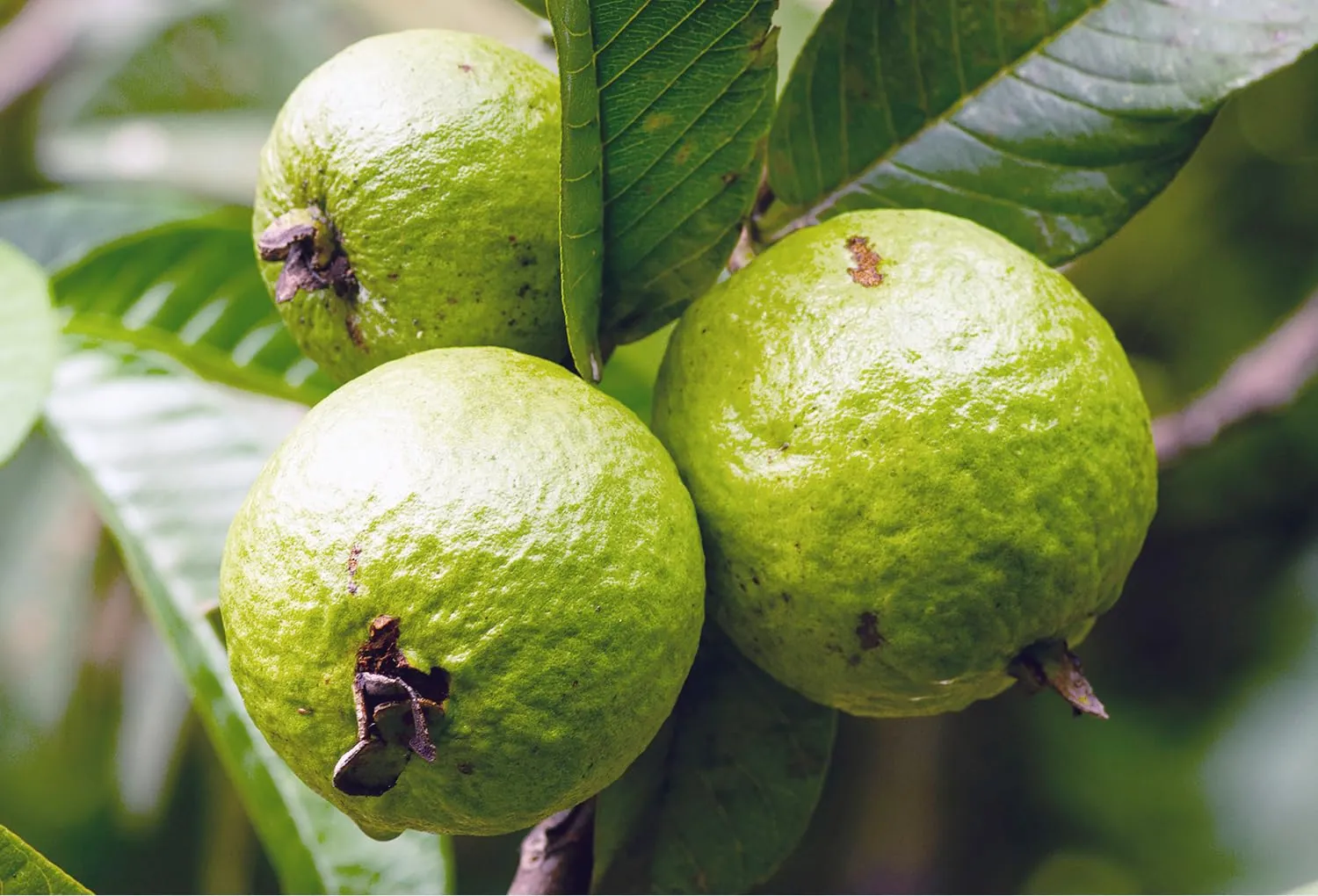
Once it arrived, Asia adopted the fruit as a crop. Wherever guava grows, people turn it into sweets, and a hard candy is one more in a long line. A green candy from Guangdong that tastes of a Central American fruit is the end of a long trip.
Bars of thick, rich guava paste and guava cheese are staple sweets, and guava jelly is almost universally marketed.
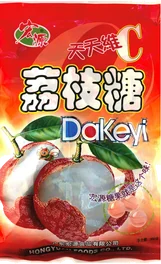
Lychee is the red Dakeyi bag. The candy inside is small and white, and reviewers who like it call the flavor close to the fruit, sweet with a bit of tartness. Some buyers come to it after guava.
Great little candies that tasted like lychee. I discovered these after buying the guava candies we received at a Thai restaurant.
Fans also point out something practical. A hard candy lasts longer in the mouth than a gummy, so a bag goes further.
I used to get gummy candy but it goes so fast. This hard candy lasts a while.
Lychee draws more criticism than guava, and the complaints are all about taste. One buyer compared it with a Japanese lychee candy and came away unconvinced.
The taste is adequate, it will satisfy that craving for a sweet candy, but has a bit of a medicinal/dirt root taste that I personally don't care for.
Another reviewer summed up the split in one line: a hit or miss flavor, but the people who like it love it. If you enjoy lychee in drinks or desserts, the odds are on your side.
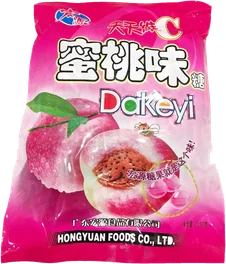
Peach is the pink Dakeyi bag, and it is the quiet member of the family. The one buyer who reviewed the four-bag pack in writing found its flavor weaker than guava. For some people that is the point: a candy dish that does not announce itself across the room.
The peach bag also carries the frankest label in the range. In capitals, it calls itself artificially flavored peach hard candy. Under U.S. labeling rules that phrase has a precise meaning.
The term artificial flavor or artificial flavoring means any substance, the function of which is to impart flavor, which is not derived from a spice, fruit or fruit juice, vegetable or vegetable juice
In plain terms, the peach taste does not come from peaches. Many fruit candies are flavored the same way, and this bag prints it on the front. The same label counts the calories: 45 for 6 pieces. The full peach label is short enough to read in a minute.
Nobody orders the trio for the pineapple. They order it for the guava they tasted in a restaurant, and then the yellow bag empties first. More than one review tells that story.
Pineapple is a personal favorite
The pineapple bag is also the only one that prints its own piece count on the front: 350 g, about 135 pieces. That works out to roughly 2.6 g a candy, and it is the best measure there is for every bag in the Dakeyi series.
The pineapple has a very good flavor
On its own, pineapple sells as a pack of 3 bags at $8.33 a bag. To taste one bag first, take the pineapple, guava & lychee trio at $4.88 a bag.
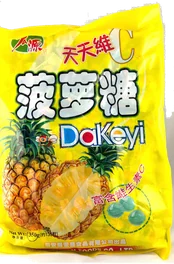
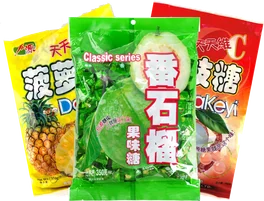
Sold as a pack of 3 bags
$14.63 for 3 bags, $4.88 a bag
The tangerine peel bag is the odd one out. Its flavor is not a fresh fruit but an ingredient: chenpi, the dried peel of the mandarin orange. Cantonese cooks drop a piece into soups that simmer for hours.
Xinhui chenpi (XHCP), the sun‐dried peel of the mandarin orange, Citrus reticulata “Chachi,” is the most famous crude drug, as well as a traditional seasoning in Chinese cooking.
Chenpi is not made in a week. The peel is dried in the sun and then put away, and its value climbs with age.
The transcendent journey of the humble mandarin peel begins with sun-drying, followed by three years of storage.
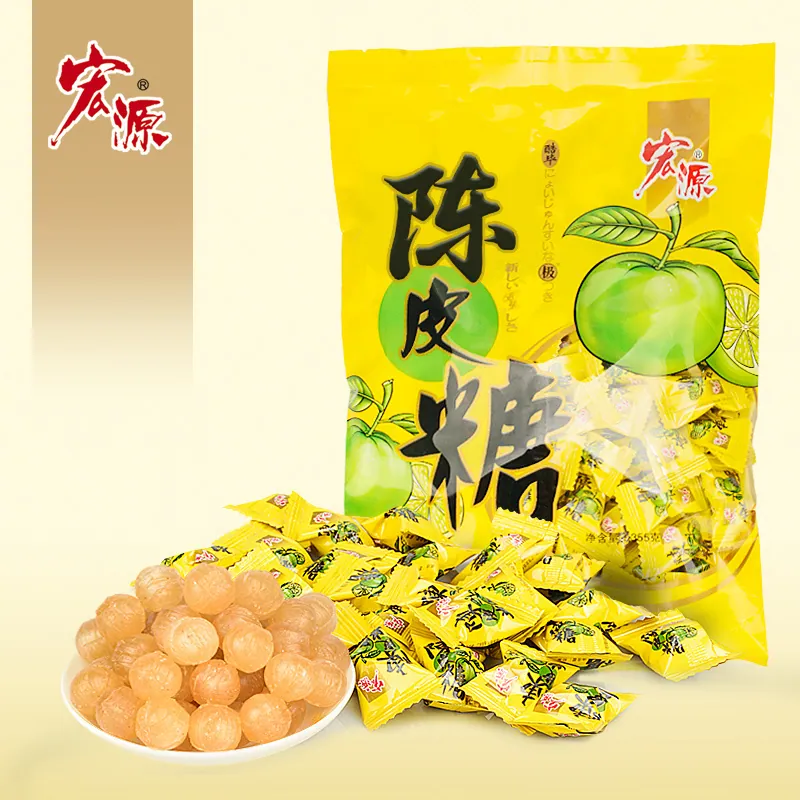
The candy is flavored after that taste, and the result divides people more sharply than any other bag. One buyer who knows the taste calls it balanced and traditional.
Not too sweet, not sour, and each piece is small (a serving is 4 pieces with a total of 50 calories).
Those who expected orange soda are startled. Dried peel has an earthy, slightly bitter side that fresh citrus does not, and the candy carries some of it.
Tastes like tart orange and dirt, or maybe mold.Such a strange flavor.
There is a local touch here as well. Hongyuan's factory stands in Chaozhou, one of the places the dried peel itself comes from.
In China, Chaozhou and Jiangxi are among the most popular locations of mandarin peel production, but nowhere can compete with Xinhui in terms of quality.
Green apple has no bag of its own in the brand's store. It comes as one of the three bags in the pineapple, guava & green apple trio, 350 g of it, beside two flavors you may already know.
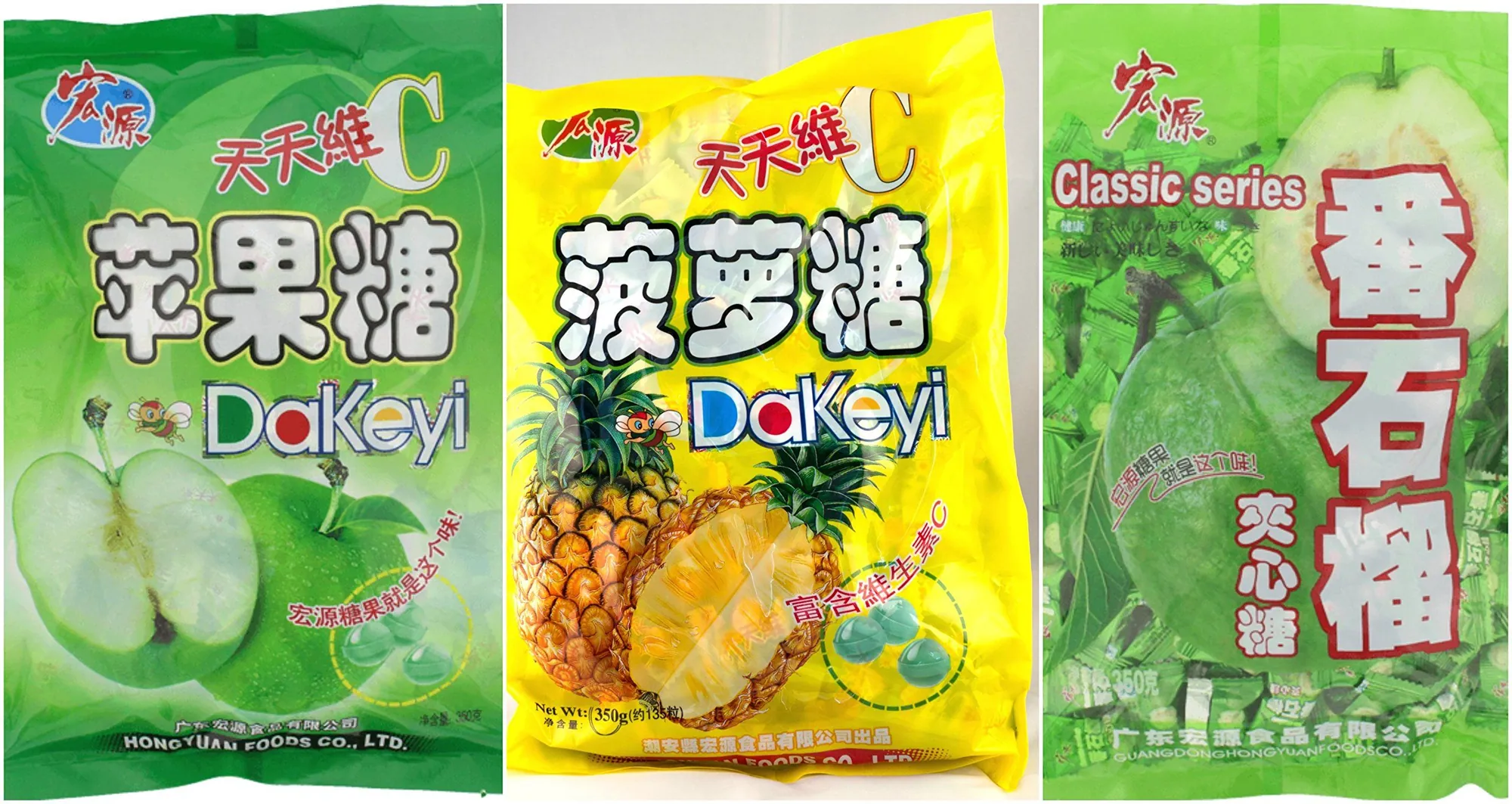
At $8.00 a bag, this trio is a dear way to buy guava or pineapple. It earns its price only if green apple is the bag you came for. A buyer who has ordered a green apple trio several times is clear about which bag that is.
My favorite is green apple.
Sold as a pack of 3 bags
$23.99 for 3 bags, $8.00 a bag
Under the flavors, every bag holds the same thing: a hard candy. Confectioners sort sweets by how hot the sugar syrup was cooked, because heat decides how much water is left. Hard candy, like a lollipop, sits at the top of that ladder.
| Stage | Syrup temperature | Sugar in the syrup | Sweets cooked to it |
|---|---|---|---|
| Soft ball | 235°F to 240°F | 85% | Fudge, pralines, fondant |
| Firm ball | 245°F to 250°F | 87% | Caramels |
| Hard ball | 250°F to 265°F | 92% | Nougat, marshmallows, gummies, rock candy |
| Soft crack | 270°F to 290°F | 95% | Saltwater taffy, butterscotch |
| Hard crack | 300°F to 310°F | 99% | Toffee, nut brittles, lollipops |
At these temperatures, there is almost no water left in the syrup.
That missing water explains the snap, the long life in a dish and the slow melt in the mouth. It also explains why a hard candy needs a second kind of sugar. Plain table sugar wants to turn back into crystals as it cools, and crystals make a candy cloudy and gritty.
Lots of sucrose crystals would result in grainy, opaque candy instead of the clear, glassy lollipops you're trying to create.
Glucose syrup gets in the way of those crystals. It is second on both Hongyuan ingredient lists that can be read in full, guava and peach. Then comes the sour note. Every fruit candy needs one, or it tastes of sugar alone.
Citric acid, sold as colorless crystals or powder, is an optional ingredient that adds tartness to fruit-flavored candies.
So the recipe is short: sugar, glucose syrup, an acid, a flavor and a color. Change the last two and guava becomes peach. The label guide goes through the ingredient lists line by line.
A hard candy with no dye is pale and nearly clear, whatever its flavor. Color is how the eye tells one piece from another in a mixed dish. The food regulator says as much.
Color additives may be used in food to enhance natural colors, add color to colorless and ‘fun’ foods such as cake decorations, and help identify flavors (such as purple for grape flavor or yellow for lemon).
Guava candy gets its green from two dyes named on the label, Blue 1 and Yellow 5. Peach uses Red 40, Yellow 5 and Yellow 6. The bags follow the same code: green for guava, red for lychee, pink for peach, yellow for pineapple. You can find your flavor on a shelf without reading a word.
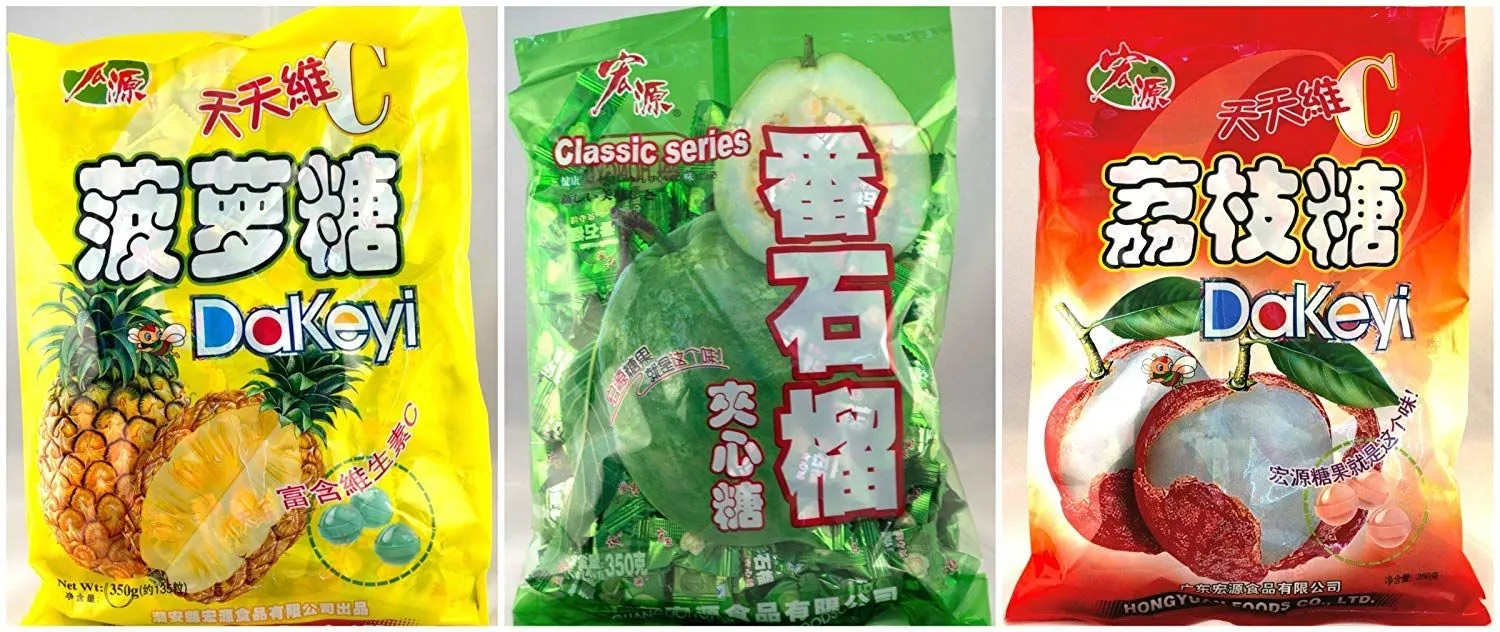
Start with guava. It is the flavor restaurants hand out, it holds 4.7 out of 5 across 13,602 ratings, and one bag costs $5.99.
If you already know guava, or already know you dislike it, pick by what you enjoy elsewhere.
| If you like | Try | What to expect | From |
|---|---|---|---|
| The candy from the restaurant dish | Guava | Sweet at first, tart at the end, with the musky scent of the fruit | $5.99 |
| Perfumed, floral fruit | Lychee | A small white drop, sweet with a tart edge | $7.49 |
| Something milder than guava | Peach | The quiet bag, with 45 calories per 6 pieces on its label | $16.89 |
| The flavor people did not expect to love | Pineapple | Named the favorite bag by more than one trio buyer | $24.99 |
| Traditional Chinese flavors | Tangerine Peel | Sweet citrus with an earthy finish, modeled on dried tangerine peel | $14.95 |
| No idea yet | Pineapple, Guava & Lychee Trio | One full bag each of three flavors in one pack | $14.63 |
Sold as a pack of 3 bags
$14.63 for 3 bags, $4.88 a bag
There is also a shortcut. The flavor finder asks three questions about taste and occasion and names one bag.
Where the candy will live matters as much as how it tastes. Guava is the after-dinner flavor: strong, a little tart, and tied in most people's minds to the end of a good meal. It belongs on the table at home or by the door.
An office jar is a different audience. People take a piece without thinking, many times a day, and a flavor that fills the room can wear thin. One lychee buyer picked that bag for exactly this job, and a tangerine peel buyer hands the candy to colleagues.
I give these delicious candies to my fellow employees It keeps them from running away
For a purse or a pocket, any flavor works, because each piece is wrapped. Reviewers stash them in cars, work bags and coat pockets. The wrapper is the reason a handful survives a week at the bottom of a bag.
A mixed dish looks better than a dish of one color, and it lets guests choose. Guava, pineapple and lychee sit well together: three colors, three fruits, none of them shy.
Keep tangerine peel in a dish of its own. Its earthy note is the one flavor some guests will not expect, and a person who reaches for citrus and gets chenpi may not reach again. A small separate bowl turns it into a conversation piece.
Whatever you mix, mix hard candy only with hard candy. Soft sweets in the same bowl give up moisture, and the hard pieces turn sticky.
Storing these sweets in the same container will cause the harder candies to become sticky.
Star averages hide the shape of opinion. Two candies can share a score while one is liked by nearly everyone and the other is loved by most and disliked by a few. The split of stars on the most rated pack of each candy tells more.
| Candy | Ratings | Average | 5-star share, most rated pack | 1- and 2-star share, most rated pack |
|---|---|---|---|---|
| Guava Hard Candy | 13,602 | 4.7 | 85% | 3% |
| Lychee Hard Candy | 298 | 4.5 | 75% | 6% |
| Tangerine Peel Hard Candy | 12 | 4.5 | 77% | 11% |
| Fruit Candy Trio: Pineapple, Guava & Lychee | 1,436 | 4.7 | 83% | 3% |
Guava combines the largest crowd with a small share of low scores. The less common flavors draw fewer ratings, so a handful of unhappy buyers moves their numbers more. The reviews themselves are worth reading for the reasons behind the stars.
Guava is the safe first bag and the strongest flavor. Lychee is for people who like floral fruit, peach for those who want something mild, pineapple for nearly everyone. Tangerine peel is for those who know what chenpi is, and green apple is the reward for buying a trio.
Sources read for this guide
The same 350 g bag sells in several packs, and the price of one bag changes with each. The arithmetic, a party planner and storage advice.
Two stickers, two ingredient lists and a few misprints. What each line on a Hongyuan bag means, from glucose syrup to Yellow 5.